


Reseller and partner-to-partner sales on Microsoft Marketplace: a step-by-step plan
Updated 10 Nov 2026
The short answer. Build a reseller channel in eight steps: check demand, choose distributor or direct resellers, pick a reseller type, set a margin you can afford, write a one-page partner program, shortlist warm targets, pick the right private offer and get one partner to transact. At WeTransact, we recommend getting that first partner to transact before you recruit more.
In plain words. Partner-to-partner, or P2P, means another company sells your software to its own customers. A common kind is the CSP, short for Cloud Solution Provider: a reseller in a Microsoft program for selling Microsoft cloud services. You give them a margin and a reason to sell. The deal is set up through Marketplace.
This is not co-sell, where Microsoft's sellers help you. We call it a double sell: you recruit the reseller first, then help them sell to their customers.
Get the complete guide to Microsoft FY27 Marketplace Incentives
Every Microsoft incentive for software companies: what it pays, who qualifies and how to claim it.
Download the e-book →
Does this apply to you?
Probably yes, if customers already buy products like yours, you serve small or mid-sized customers who often buy through resellers, and you can give a partner a real margin and a named person's time.
New to the store? Start with our guide to what Microsoft Marketplace is and how it works.
Not yet, if you cannot name three customers who bought a product like yours in the last 12 months. Fix demand first (step 1).
Be careful, if you sell to a few large accounts with your own sellers. Co-sell with Microsoft may fit better. Read our 10-week co-sell plan or our FY27 co-sell guide.
Two meanings of partner-to-partner
In this post, partner-to-partner means selling through resellers. Partner Center, Microsoft's admin site for partners, also has a deal type with the same name. In it, one partner invites another into a single deal and can add a Microsoft seller.
In those deals, Microsoft says only the partner that holds the end-customer contract for the software should register the deal, if it qualifies for registration.
We run the reseller channel as a 10-week plan to a first activated partner. We focus only on Microsoft Marketplace, and about 1 in 10 SaaS offers on it already run on WeTransact.
For the basics of partner types and private offers, see our guides to channel partners on Azure Marketplace and private offer types. This post does not repeat them.
Step 1: check that demand already exists
We start with a gate. Answer three questions. If any answer is no, stop and build demand first.
- Do the customers of your target resellers already show demand for your product category? Look for inbound requests, RFPs (formal buying requests) or budget lines, and name at least one example.
- Can you name three customers who bought a product like yours in the last 12 months? Real purchases, not prospects.
- Are Microsoft sellers already pulling your product into deals, or are you still pushing?
Resellers amplify demand, they do not create it. Recruiting before demand exists builds a channel that never transacts and costs you credibility.
Step 2: choose distributors, direct resellers or both
Microsoft's CSP program has two models. A distributor, formerly called an indirect provider, supplies many smaller resellers. A direct bill partner buys straight from Microsoft. Microsoft requires direct bill partners to have sold as indirect resellers for 12 months and to have at least $1 million in CSP revenue over 12 months, so they tend to be larger.
This is how we compare the routes.
- Distributor. You reach 100,000 or more resellers, mostly serving small and mid-sized businesses, through one to five distributors. Low effort. We plan 4 to 8 weeks to a first deal. Best for volume.
- Direct reseller. About 8,000 direct CSPs are available in our platform. High effort, because you recruit and train each one. We plan 8 to 16 weeks to a first deal. Best for mid-market and enterprise.
- Hybrid. Start with distributors for reach, then add direct resellers for quality and margin control.
Step 3: choose the type of reseller
We work with three types. You will likely target one or two.
- Value-added reseller (VAR). Product-led, deals under 30 days, small and mid-sized customers.
- Managed service provider (MSP). Managed services, recurring revenue, deals tied to service levels.
- Systems integrator (SI). Complex projects of 60 days or more, mostly enterprise.
Our test: implementation over 60 days, or enterprise only, points to an SI. Managed services points to an MSP. Quick, product-led deployment points to a VAR. Also check which partners already resell Microsoft, which speeds up the talks.
Step 4: work out your economics before you name a margin
Signing a partner on a margin you cannot afford is how reseller programs end. Model one deal end to end.
- List every cost: product cost, hosting, onboarding, support hours per customer, co-marketing and your own partner-management time.
- Add Microsoft's fee, which Microsoft Learn calls the agency fee. It is 3%, paid by the partner that creates the private offer. On customer and multiparty private offers, renewals get a 50% discount, so 1.5%, if the renewal is self-attested when the offer is created.
- Add the margin. A margin is a percentage off your list price. For example, 30% on a $1,000 plan means the partner buys at $700.
- Compare what is left with your target gross margin.
We suggest these starting points, to test with your Finance team: 30 to 40 percent for a value-added reseller, 25 to 35 for a managed service provider, 20 for a distributor and 10 for implementation-heavy integrators. They are our suggestions, not Microsoft rules. Lock your bands before the first conversation, not during it.
Step 5: write the one-pager
Your one-pager is your main recruiting tool. Send it to every prospect before the first call. We ask you to settle eight things first.
- Margins by partner type.
- Onboarding: who approves resellers, how long it takes, what happens on day 1.
- Support: channels and response time.
- Training: we run mandatory fundamentals training for every reseller you recruit, and partners complete it before they sell.
- Deal registration: how partners claim a deal and how long it is protected.
- Performance: monthly targets and quarterly check-ins.
- Enablement: collateral, deal help, co-marketing.
- Contract: terms, payment and intellectual property.
If you opt into the CSP channel, Microsoft also asks for a web address with sales materials and channel contacts. You stay responsible for support to end customers.
Add a better-together story. Resellers want proof that your software strengthens their Microsoft business. Name the Microsoft product you extend, the gap it leaves and the combined outcome.
Step 6: shortlist warm targets
Run an overlap analysis before you write any outreach. Load your target accounts into Crossbeam, an account-mapping tool that shows which customers you share with a partner. Our platform connects to it in one click. Run it against the CSP directory. Keep resellers that already have paying customers on five or more of your target accounts.
The result should be about 10 partners, usually 5 to 15, not hundreds. For each, note the overlap count and the three biggest shared accounts.
Then go in warm:
- Use the warmest path: a shared customer, a Microsoft seller who covers both sides, or an executive who speaks about your category. Ask for a three-line introduction and a 20-minute call.
- Win the champion first. That is the practice lead who owns the gap your product fills. Approach the executive sponsor only after the champion names a customer opportunity.
- Go cold only when the warm list is used up and at least one partner has transacted. Use three short plain-text touches, on day 1, days 4 to 6 and days 10 to 12, each with new information.
Step 7: choose the right private offer
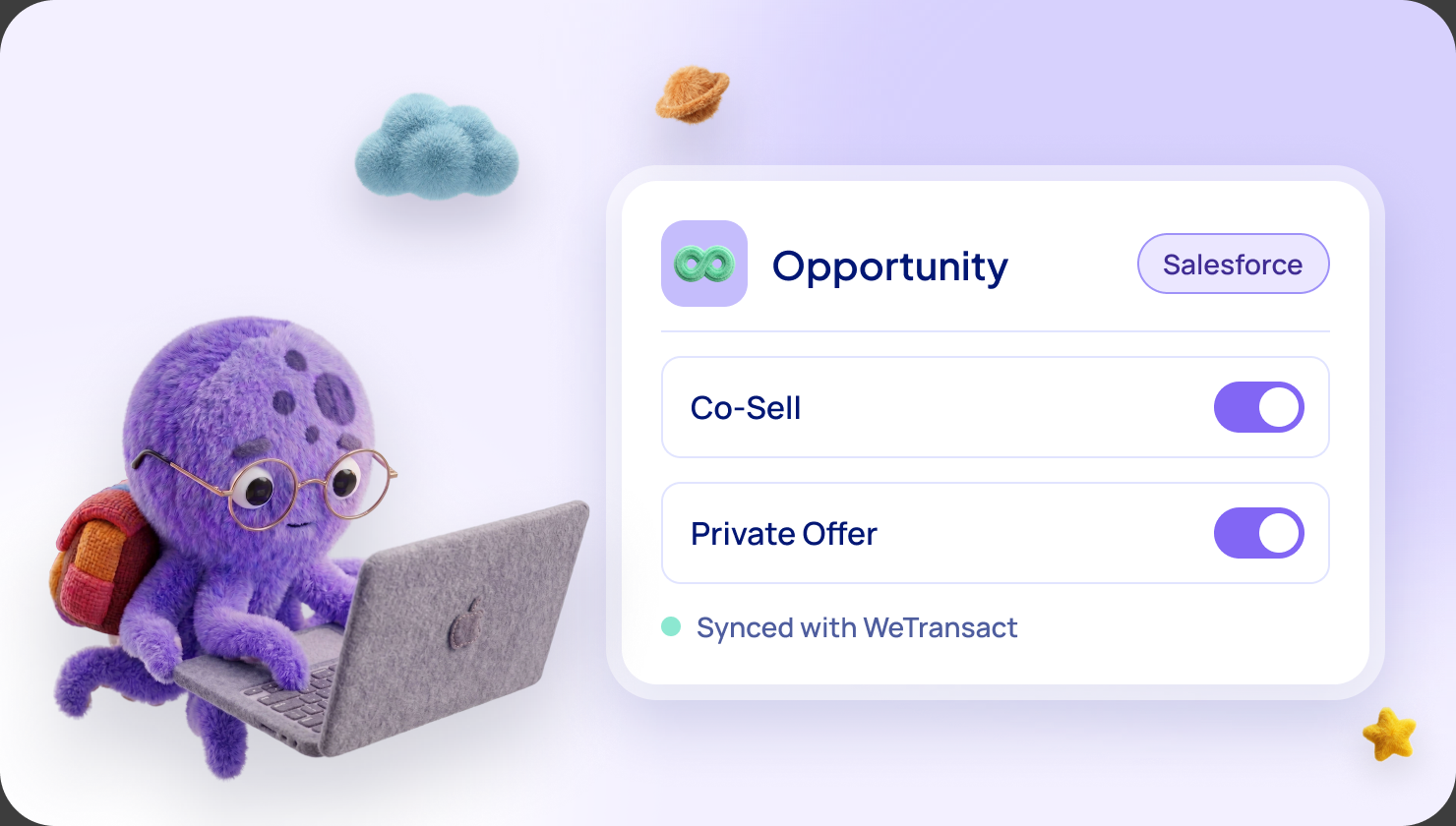
Microsoft has three kinds of offer that put a partner in the deal. Its channel overview compares them. In our cloud GTM platform you can create all three.
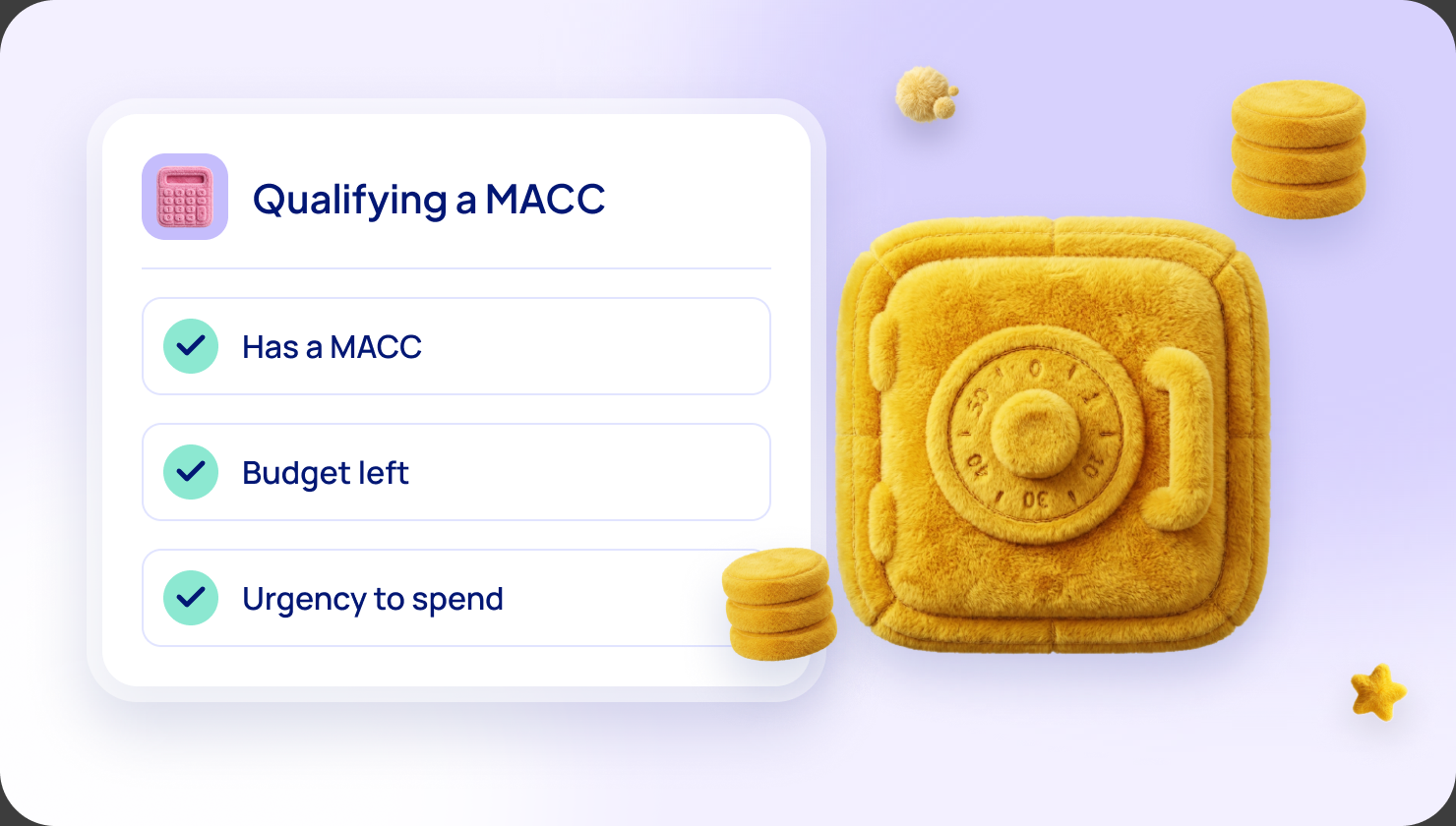
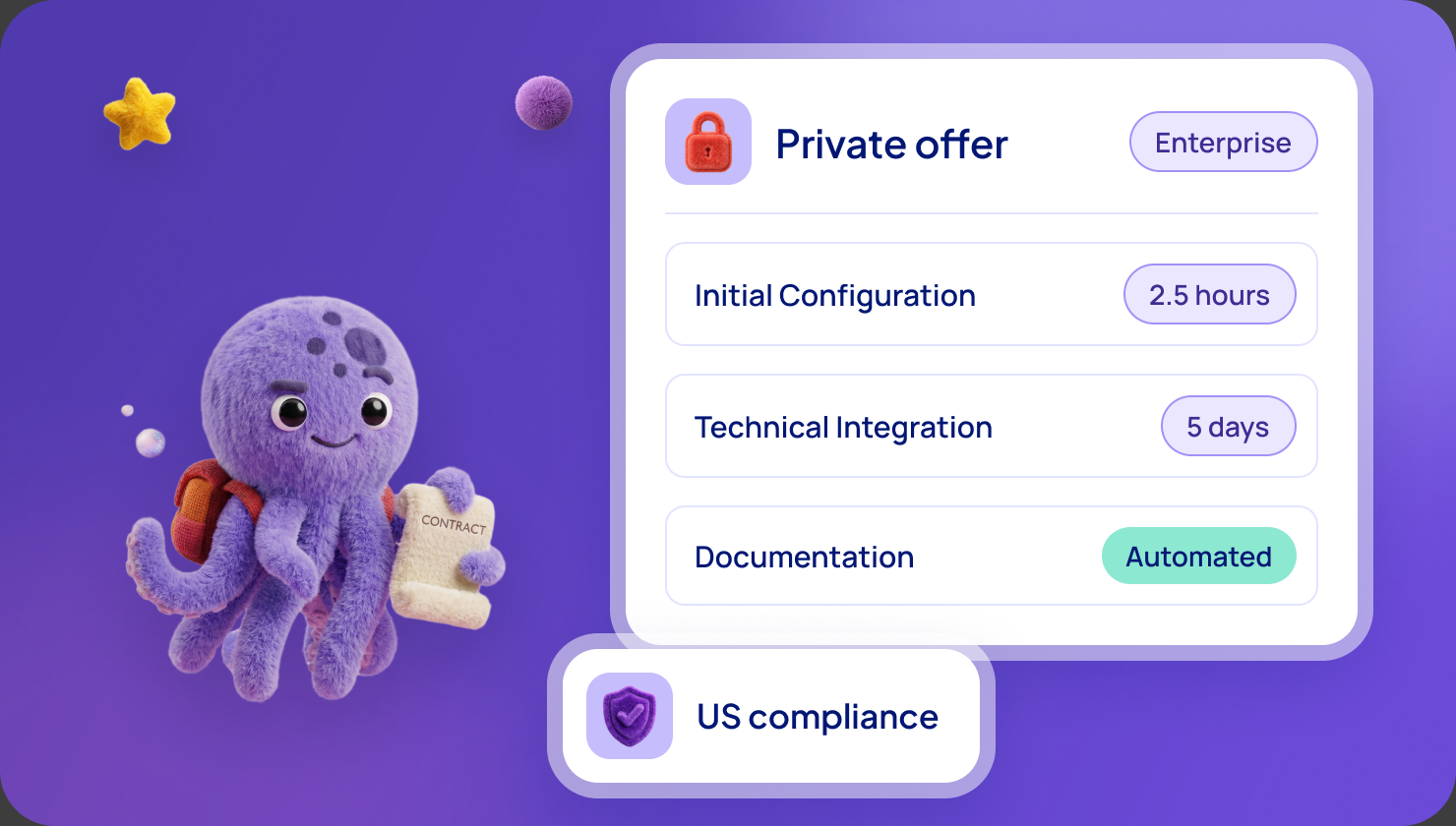
CSP private offer. You give a CSP partner a margin and dates. The partner sets the customer price and bills the customer outside Marketplace. Microsoft pays you the wholesale price, less its fee. There is no acceptance step. It does not count toward the customer's MACC, the Microsoft Azure Consumption Commitment, which is the amount a large customer has promised to spend with Microsoft. Sales through it do not earn Azure sponsorship credit either.
You can extend one only to direct bill partners and distributors, up to 50 partners per offer. Resellers below a distributor work through it. Your offer must be transactable (Microsoft bills for it) with a public plan, not free or contact-me. We tell customers to use it when their buyers are mostly small and mid-sized businesses managed by CSPs.
Resale enabled offer. You authorize a partner once, for one offer and chosen markets. The partner then creates private offers for its own customers without you. Microsoft collects from the customer and pays the partner, and the partner pays you outside Marketplace. When your offer is co-sell eligible, 100% of the purchase counts toward the customer's MACC.
Two cautions. Microsoft says you will not see the price on the partner's private offers, though you can follow orders and usage in Partner Center. And because the partner pays you outside Marketplace, you carry the payment risk on the partner.
Multiparty private offer. You create the offer with a partner price. The partner adds its own percentage and sends it to the customer. The customer accepts in the Azure portal, and Microsoft bills the customer. It pays the partner with no fee and pays you with the fee applied. Co-sell eligible offers count 100% toward the customer's MACC. It works only for customers in the supported countries, more than 30 markets, and does not cover professional services.
Our simple rule: use a CSP private offer when a CSP buys and bills. Use a multiparty private offer when you want to shape each enterprise deal. Use a resale enabled offer when you trust a partner to run alone.
A customer whose subscription a CSP manages needs a CSP private offer. Microsoft's overview lists pay-as-you-go, Enterprise Agreement and Microsoft Customer Agreement as the customer contracts for the other two kinds, and CSP only for CSP private offers.
Plan for cash flow too. Microsoft Learn says payouts on CSP sales are made once Microsoft has collected, and that longer payment terms, such as Net 60, delay the payout. In our experience a CSP deal takes about 2 to 4 months from purchase to payout. For SaaS, you must also activate each subscription yourself.
Step 8: get one partner to transact
For us, the milestone is a partner that transacts, not one that signs.
- Name one partner champion on your side, and have the agreement template ready in week 1, not week 7.
- Hand each partner three to five named customer targets in week 4, taken from your overlap list.
- In the first 30 days, hold one weekly session on a single shared account. From day 60, move to a monthly review that must name a deal.
- Check your co-sell status. In our experience it adds credibility with resellers.
- Write the bar before you sign anyone: one closed Marketplace deal within 90 or 120 days.
- At that date, either restart with a concrete deal and a 30-day sprint, or wind the partnership down. Do not keep it active on paper.
In our experience most signed reseller agreements never produce a deal, so we plan for pruning from day one.
Common mistakes
We see these patterns kill channels.
- Recruiting before demand exists (step 1).
- Mixing up a distributor, which feeds many resellers, with one reseller (step 2).
- Sending generic outreach instead of a better-together story (steps 5 and 6).
- Having no written program for margins, support and training (step 5).
- Giving partners no activation plan and assuming they will self-start (step 8).
- Boosting SaaS Reach on Azure Marketplace with Resellers
- Building a Reseller Channel on the Microsoft Marketplace
- Marketplace Bites #3 - Marketplace Channels
- Maximize Partner-to-Partner Purchasing on Azure Marketplace
- Reseller Channel Strategies: A Strategic Blueprint
- The Role of MSPs in SaaS Growth
Frequently asked questions
What is partner-to-partner selling on Microsoft Marketplace?
It is when another company, often a CSP reseller, sells your software to its own customers. You give it a margin, and the deal is set up through Marketplace.
What is the difference between a distributor and a direct reseller?
A distributor supplies many smaller resellers, so you recruit once and reach many. A direct reseller buys on its own, so you recruit and train each one.
What is the difference between a CSP private offer and a resale enabled offer?
With a CSP private offer you give a CSP a margin, and it bills the customer outside Marketplace. With a resale enabled offer you authorize a partner to create Marketplace private offers on its own.
Does a reseller deal count toward the customer's MACC?
Not through a CSP private offer. Resale enabled and multiparty private offers count 100% when your offer is co-sell eligible, according to Microsoft Learn.
Who pays Microsoft's 3% fee in a reseller deal?
Microsoft Learn says the partner that creates the private offer pays it. In a CSP or multiparty private offer that is you. In a resale enabled offer it is the partner.
How much margin should I give a reseller?
You choose the percentage. We suggest 30 to 40% for a value-added reseller, 25 to 35% for a managed service provider and 10% for implementation-heavy integrators.
How long until the first reseller deal?
We plan 4 to 8 weeks through a distributor and 8 to 16 with a direct reseller. Treat these as estimates.
Sources: Microsoft Learn, CSP private offers, Overview of channel-led sales through Microsoft Marketplace, Resale enabled offers (overview and offer owners), Multiparty private offers (overview, software companies and channel partners), Cloud Solution Provider program overview, Cloud Solution Provider offer opt-in, Agency fee discount for renewals, Payout schedules and processes, Manage co-sell opportunities, and Azure consumption commitment benefit. Reach, timing and margin figures are our own estimates and suggestions. Microsoft may change its programs at any time.
Want the full picture?
Everything here is also in our complete guide to Microsoft FY27 Marketplace incentives, with plain-words notes for newcomers. Get the complete FY27 guide
Not sure which incentive fits your company?
Ask for your free Microsoft Incentives Assessment: a personalized report of every incentive your company can claim, what each is worth, and the order to claim them. Free, no obligation. No Partner Center login needed to start. Ask for your free Assessment