


How to make your first $100,000 in Microsoft Marketplace billed sales or Azure use
Updated 6 Nov 2026 · FY27 (1 October 2026 to 30 June 2027) · Reviewed by an ex-Microsoft team member
The short answer. Microsoft's co-sell door opens at $100,000 of Marketplace billed sales or $100,000 of Azure consumed revenue over 12 months.
Most software companies can reach the first number without a single new customer. Move renewals you already invoice into Marketplace. Close deals in negotiation through Marketplace. The price is Microsoft's 3% fee: $3,000 on the first $100,000.
In plain words. "Billed sales" is money your customers were invoiced through Microsoft Marketplace. It is not new revenue. It is revenue you already have, billed through Microsoft instead of by you.
Cross $100,000 and Microsoft unlocks more for you than the 3% costs.
Get the complete guide to Microsoft FY27 Marketplace Incentives
Every Microsoft incentive for software companies: what it pays, who qualifies and how to claim it.
Download the e-book →
Why $100,000 matters
Three things open at this line, all in Microsoft's FY27 material.
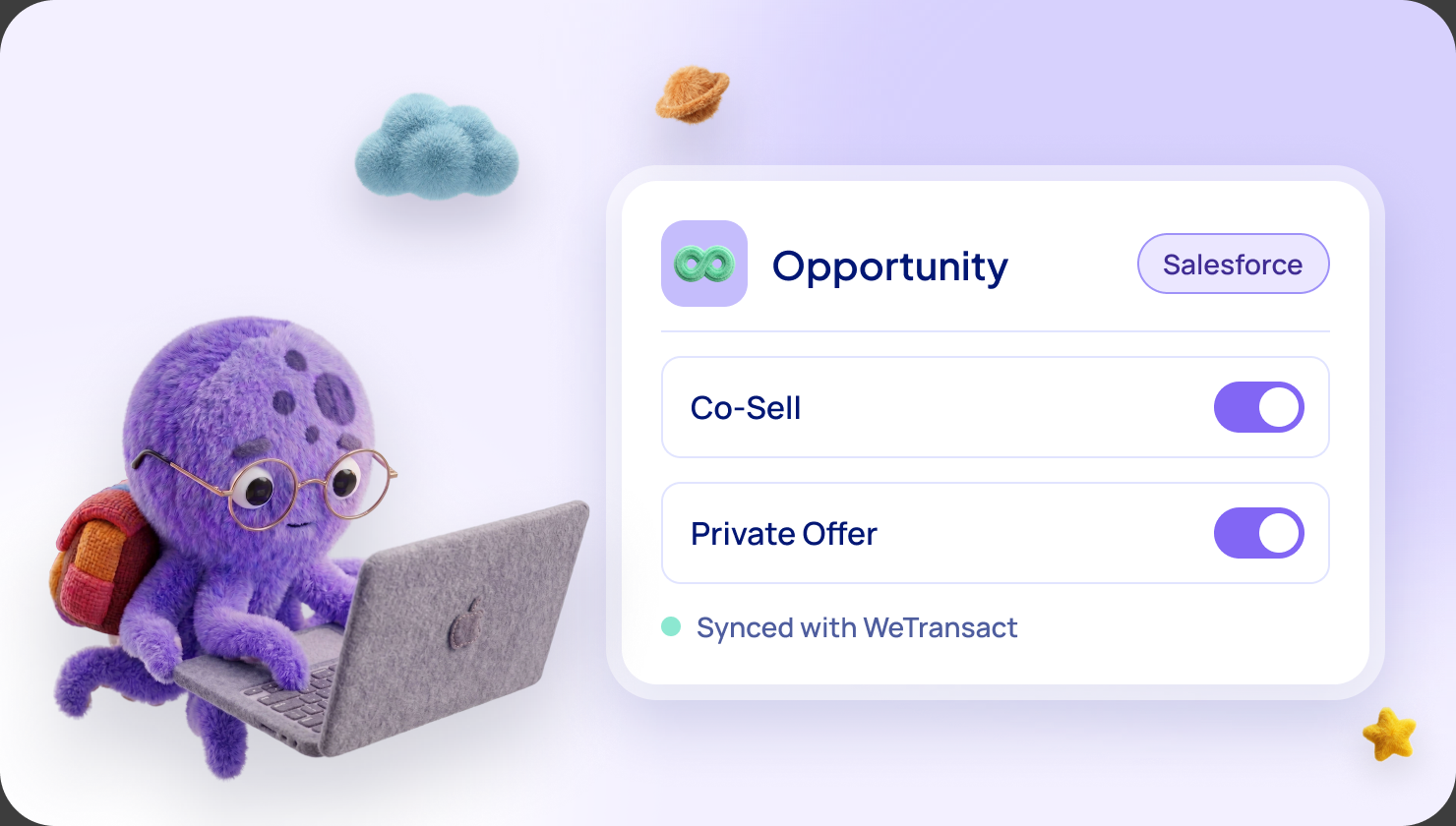
- Co-sell. Microsoft's own sellers get quota credit when your Marketplace deals close, so they have a reason to introduce you.
- A bigger credit allowance. Your Azure sponsorship allowance steps from $2,000 to $35,000. You can give that credit to customers to help close deals.
- Cash. AI Build & Publish for Marketplace opens. It pays $4,000 to $80,000, depending on the sales you plan for year one.
For co-sell you need a transactable offer plus one of these: $100,000 of billed sales, $100,000 of Azure use from your solution, or a $1 million Azure commitment. Microsoft still calls these criteria a pilot in FY27.
Read the details in co-sell in FY27, Azure sponsorship and AI Build & Publish.
Does this apply to you?
Probably yes, if you sell to businesses on a subscription or usage basis and have a few customers on annual contracts.
You need one transactable offer. That is a listing with a price, where Microsoft bills the customer and pays you. No certification and no minimum revenue are needed to start.
Be careful, if your customers are all small and none use Microsoft. The 3% fee buys you little when the buyer cannot use Microsoft budget.
Lever 1: move the contracts you already have
This is the simplest lever, and the one most companies miss.
Say you invoice a customer $46,000 a year directly. At the next renewal, invoice the same customer the same $46,000 through Marketplace. The customer, the price and the product stay the same. Only the billing changes.
The WeTransact FY27 guide shows this with a made-up company, Contoso, with about $900,000 of recurring revenue. In its first year it moves two existing renewals, $46,000 and $38,000, into Marketplace. It also signs two new customers at $22,000 and $14,000.
Its billed sales reach $138,000 and pass $100,000 in the last quarter. For a company that size, $100,000 is about one ninth of what it already bills.
Contoso is not a real company. It shows the arithmetic.
Before you try it:
- Count invoices, not orders. Invoices go out the month after the order, so a deal signed near a deadline often counts later.
- The customer decides. Ask their procurement team how they buy software. Many large customers can pay through Marketplace on the Microsoft agreement they already have.
- Cash arrives later. Payouts are monthly, about 30 days after the customer is invoiced, or 60 days on card payments.
- Start small. Microsoft's advice is to pick three to five deals most likely to sell through Marketplace. Good picks are customers who have bought there before, or who want simpler procurement.
Lever 2: close deals in negotiation through Marketplace
Deals still in negotiation are the second source.
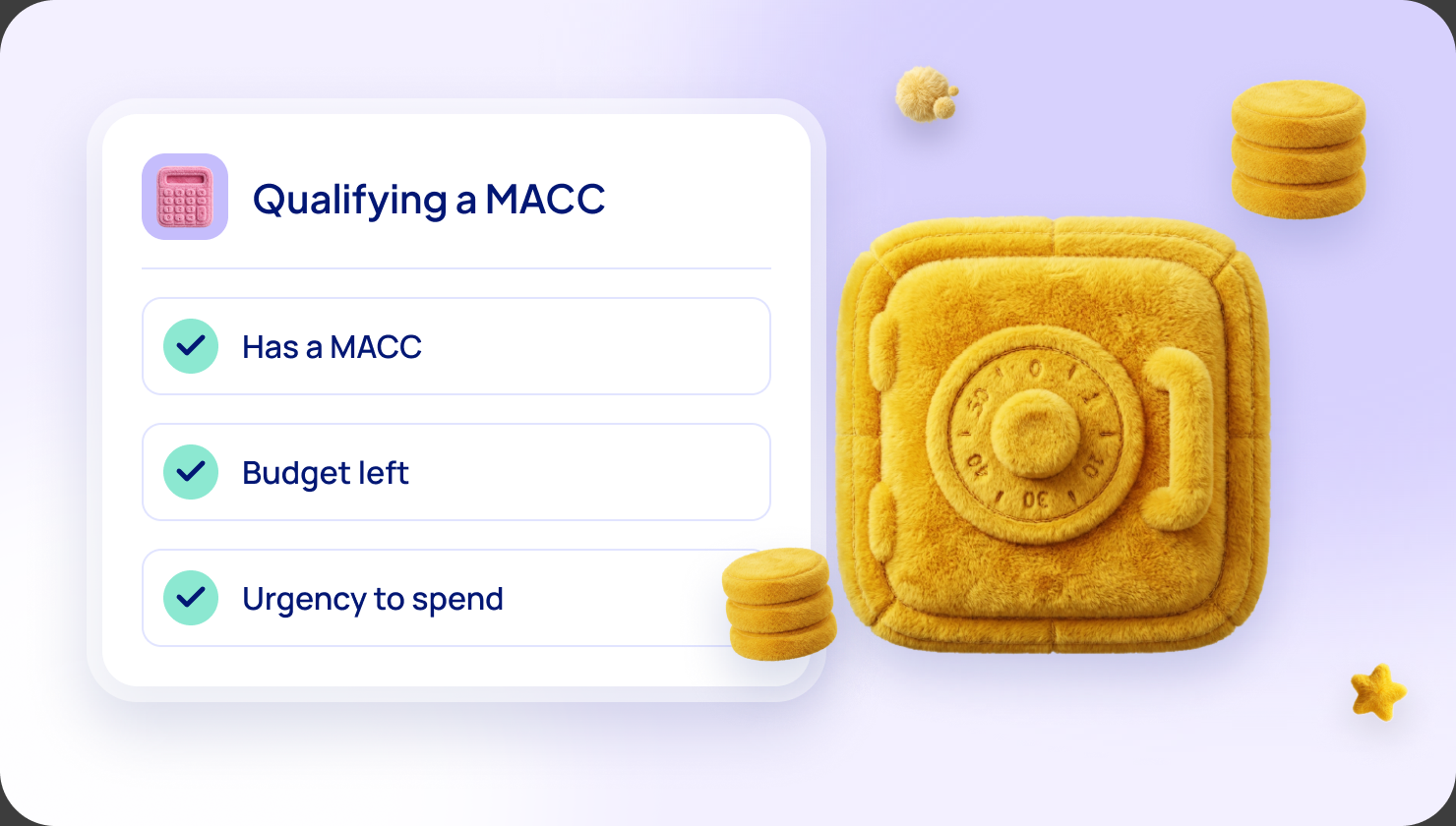
The case for moving them is budget. Large organizations commit to Microsoft spend in advance. That promise is called a MACC, short for Microsoft Azure Consumption Commitment.
Microsoft's co-sell article says 100% of eligible software purchases can count toward a customer's commitment. So the customer may not need a new budget approval.
Does it close faster? Two partner stories published by Microsoft point that way. Both are company-reported, so they are not guarantees.
- Trade Ledger says the customer's commitment streamlined budget approval and procurement on a deal that grew from $4 million to $25 million.
- Contentsquare reports that its co-sell deals through Marketplace close 11% faster and are 81% larger than direct new business.
Treat them as examples of what can happen, not as a promise.
When does a deal count toward the customer's commitment?
It depends on you as well as the customer.
Microsoft's co-sell requirements say Azure IP co-sell eligibility is a prerequisite for an offer to be MACC eligible. So if you are not yet Azure IP co-sell eligible, the deal will not count toward the customer's commitment.
It still counts as billed sales for you. And those billed sales are what get you to eligibility.
Once you are eligible, your offer can be Azure benefit eligible. Later purchases, including that customer's renewal, can then count. Nothing counts retroactively, so the sooner you cross the line, the sooner renewals start to count.
Two customer-side rules apply once you are eligible:
- The customer must buy through the Azure portal on their agreement. A direct credit-card checkout does not count.
- Azure credit never counts toward the commitment.
Lever 3: count your Azure use as well
The second route to $100,000 is Azure consumed revenue, or ACR. That is the dollar value of Azure services used over 12 months.
Microsoft's co-sell requirements accept either $100,000 of ACR or $100,000 of Marketplace billed sales. They are alternatives, not both.
Only paid use counts. Azure credits do not count toward the $100,000.
Microsoft's Frontier Accelerate for Marketplace FAQ says sponsorship consumption does not count toward ACR milestones, because it is not paid Azure usage.
Lever 4: have a migration partner move customers to your solution on Azure
When a customer moves to your solution on Azure, Microsoft pays for the project. A migration partner can do the work.
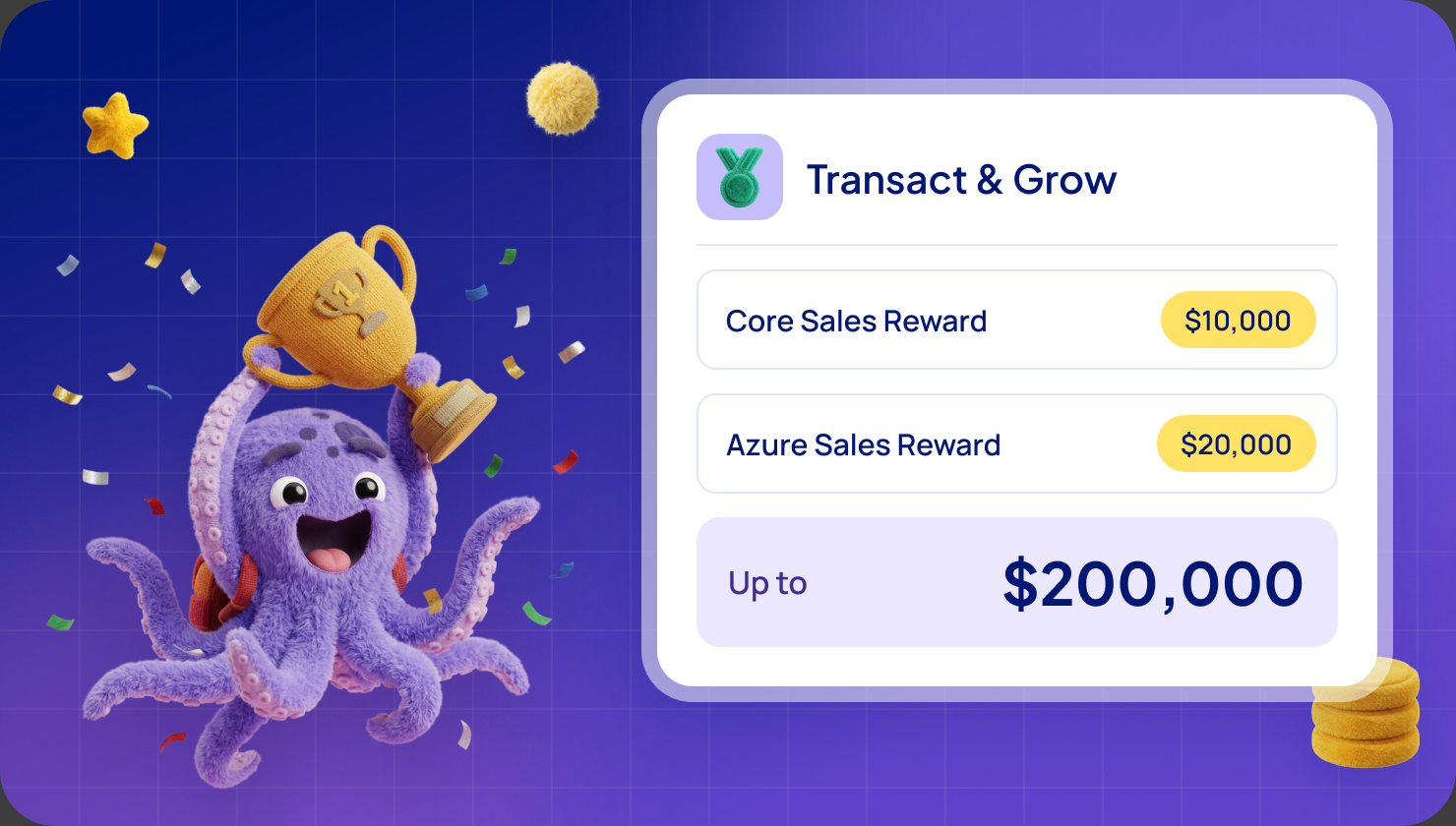
Microsoft pays you for customer moves. Customer Migrate & Modernize pays $4,000 to $200,000 when a customer moves to your solution on Azure, including customers coming from another cloud. It needs a certified software designation. See the Migrate & Modernize guide.
A partner can run it. Microsoft describes a track where an eligible migration partner nominates software companies and their customers for a funded migration project. Microsoft checks eligibility before the project starts.
The partner needs an Azure Expert MSP designation or a migration specialization. Microsoft's Frontier Accelerate for Azure partner-nominated resources, updated 6 November 2026, cover funding, skilling and delivery support for this.
Because the funding goes to the partner, ask a migration partner what, if anything, you would pay. The more of the project the incentives cover, the more the migration costs you in time rather than money.
The moved customer's Azure use then adds to your Azure consumption.
A simple order to follow
- Publish one transactable offer and join Frontier Accelerate for Marketplace, which is free.
- List your customers by renewal date. Pick three to five to move at their next renewal.
- For deals in negotiation, ask the buyer's procurement team whether they prefer to buy through Microsoft.
- Track billed sales by invoice month, not order month.
- At $100,000, register your deals for co-sell and claim your credit allowance.
Frequently asked questions
What counts as $100,000 for co-sell?
$100,000 of Marketplace billed sales or $100,000 of Azure consumed revenue over a trailing 12 months, with a transactable offer. Microsoft's FY27 material also lists a $1 million Azure commitment.
Does moving a renewal into Marketplace count as new revenue?
It counts as billed sales. The revenue was already yours. Only the billing moves.
What does it cost?
Microsoft keeps 3% of each sale. There is no listing fee. On $100,000 that is $3,000.
Does Azure credit count toward the $100,000?
No.
How long does it take?
Contoso's example passes $100,000 in its last quarter. Your timing depends on your renewal dates.
Sources: Microsoft's FY27 Partner Investments material as summarised in the WeTransact FY27 guide (version of 20 October 2026); Microsoft Partner Center, Co-sell requirements, updated October 2026; Microsoft Partner Center, July 2026 announcements; Microsoft Learn, Azure Consumption Commitment benefit and MACC FAQ; Microsoft Partner Blog, "Capturing the marketplace opportunity, part four" (13 May 2025); Microsoft Frontier Accelerate for Marketplace benefits guide (October 2026), FAQ (September 2026) and partner walking deck (October 2026). Microsoft may change its programs at any time, and every payout needs Microsoft's approval.
Want the full picture?
Everything here is also in our complete guide to Microsoft FY27 Marketplace incentives, with plain-words notes for newcomers. Get the complete FY27 guide
Not sure which incentive fits your company?
Ask for your free Microsoft Incentives Assessment: a personalized report of every incentive your company can claim, what each is worth, and the order to claim them. Free, no obligation. No Partner Center login needed to start. Ask for your free Assessment
The other FY27 incentives
- Azure sponsorship
- AI Build & Publish for Marketplace
- AI Build & Publish for the Agent Store
- Customer Assessment & POV
- Customer Migrate & Modernize
- Co-sell in FY27
Based on Microsoft's FY27 Partner Investments material and the Frontier Accelerate for Marketplace pages on Microsoft Learn. Microsoft may change its programs at any time, and every payout needs Microsoft's approval. Amounts are in USD.